Ever felt like your digital adventures are too plain? Most people use default settings, missing out on what’s possible. By tweaking certain settings, you can turn a simple session into a highly immersive story.
Knowing how to adjust temperature and randomness lets you escape boring patterns. These technical adjustments give you the power to make every experience your own. Learning these ai porn game settings is key to creating something truly unique and cinematic.
Key Takeaways
- Learn to move beyond default configurations for better results.
- Discover how temperature controls influence narrative unpredictability.
- Understand the role of randomness in creating authentic experiences.
- Apply cinematic filters to enhance visual and thematic depth.
- Gain full control over your personalized digital environment.
Understanding the Core Mechanics of AI Porn Game Settings
Every scene in interactive media is built on complex math. When you play, you talk to a smart neural network. It tries to guess what you want. Knowing ai porn game settings helps you make your vision come to life.
The Role of Large Language Models in NSFW Gaming
Large Language Models (LLMs) are key in these games. They help with dialogue and story moves. They learn from lots of data, making responses seem real.
These models don’t think like we do. They guess the next word or image based on what you say. Changing ai porn game settings lets you control how characters act and scenes play out.
How Parameters Influence Narrative and Visual Output
Every action in the game is set by numbers. These numbers control everything, from character traits to how detailed scenes are. By adjusting these, you can make the game more personal and exciting.
| Parameter | Primary Function | Impact on Output |
|---|---|---|
| Temperature | Controls randomness | Higher values increase creativity |
| Top-P | Limits token selection | Ensures logical consistency |
| Frequency Penalty | Reduces repetition | Prevents stale dialogue loops |
| Presence Penalty | Encourages new topics | Promotes narrative variety |
Knowing how these mechanics work is key for a better ai porn game settings experience. By mastering these, you can create stories that feel real and engaging. This turns you from a player into a creator of your own digital world.
Configuring Temperature for Dynamic Storytelling
To enhance your ai settings nsfw experience, start by understanding temperature. This setting controls the AI’s randomness and creativity in your gameplay.
Defining Temperature in AI Generation
In AI, temperature affects the next word’s probability. A low value means the AI picks the most likely words. A high value leads to more varied and unexpected choices.
Think of temperature as a balance between logic and creativity. Adjusting it changes how the AI responds to your prompts and keeps the story flowing.
Low Temperature Settings for Consistent Character Behavior
Setting temperature low, between 0.1 and 0.5, makes the AI focused. This is great for keeping characters consistent and logical in long roleplays.
With low temperature, the story stays on track. Characters act as expected, without sudden changes in their behavior.
High Temperature Settings for Creative and Unpredictable Scenarios
Increasing temperature above 0.8 adds more randomness. This is perfect for surprising plot twists and varied interactions in your game.
While it boosts creativity, it also needs careful management. The right balance in ai settings nsfw is crucial for the atmosphere you want in your interactive stories.
| Setting Level | Primary Effect | Best Use Case |
|---|---|---|
| Low (0.1 – 0.4) | High Consistency | Strict Roleplay |
| Medium (0.5 – 0.7) | Balanced Flow | General Storytelling |
| High (0.8 – 1.2) | High Creativity | Dynamic Plot Twists |
Mastering Randomness and Top-P Sampling
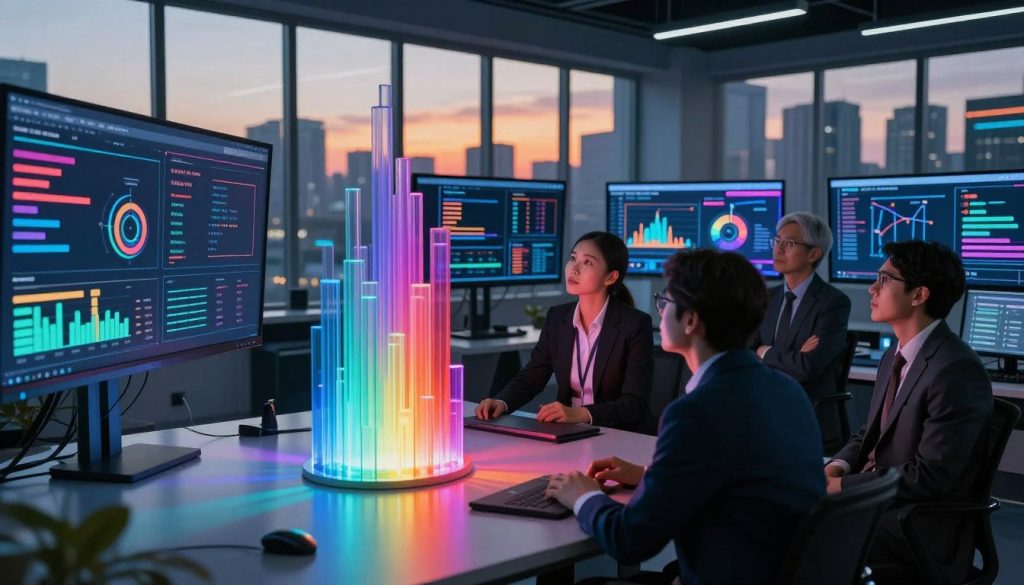
Getting your ai settings nsfw just right means understanding probability distributions. Adjusting these settings lets the model decide the next word in a sequence. The goal is to keep your stories interesting without being too random or nonsensical.
The Relationship Between Randomness and Creativity
Randomness is key to variety in your content. More randomness means the model tries out less common words, leading to creative and unexpected storylines. But too much can make the story lose its coherence.
Think of randomness as a flavor enhancer, not the main structure. A moderate level keeps the AI’s tone consistent while introducing new ideas. This balance is essential for interactive stories that feel alive.
Balancing Top-P and Temperature for Optimal NSFW Flow
Top-P sampling, or nucleus sampling, is a smart way to manage text probability. It focuses on the top words likely to appear, based on your P-value. This method helps keep your ai settings nsfw flowing smoothly.
Combining Top-P with temperature is even more effective. A lower temperature and a moderate Top-P setting keep the model on track. This is great for maintaining character consistency in complex scenes.
Troubleshooting Repetitive Text Loops
Even with great settings, you might still get stuck in repetitive text loops. These loops occur when the model repeats the same phrases or actions. To fix this, try these adjustments to your ai settings nsfw:
- Increase the Temperature: A small increase can help the model break out of a predictable cycle.
- Adjust Frequency Penalties: Higher penalties discourage word repetition in recent text.
- Lower the Top-P Value: Limiting candidate words can prevent repetition of low-quality options.
- Refresh the Context: Clearing the chat history or starting with a new prompt can refocus the model.
Implementing Cinematic Filters for Visual Immersion
To make your AI games feel real, you need more than just clear images. The look of your scenes is key to how we see the virtual world. This parameter guide will help you change how images look to fit your vision.
What Are Cinematic Filters in AI Image Generation
Cinematic filters change the color, sharpness, and texture of your images. They work like photo editing software, changing a scene’s mood quickly. These tools make your AI content look smooth and connected.
Using these filters lets you control the final look of your game. A good parameter guide shows you how to get the best results.
Adjusting Contrast and Saturation for Mood
Contrast and saturation set the mood of a scene. High contrast makes scenes dramatic, while low contrast is softer. Try different values to see how they change your story.
Saturation affects how bright your colors are. Less saturation makes scenes look gritty, while more makes them vibrant and alive.
Applying Grain and Lighting Effects for Realism
Grain makes digital images look more like film. It hides small flaws and adds texture. With the right lighting, your scenes can feel very real.
Lighting effects like bloom or lens flares add depth to your scenes. These small changes can make a big difference in how engaging your images are. Check the table below to see how different settings change your mood.
| Filter Setting | Visual Impact | Recommended Use |
|---|---|---|
| High Contrast | Dramatic, Sharp | Action or intense scenes |
| Low Saturation | Gritty, Realistic | Dark or serious narratives |
| Heavy Grain | Vintage, Film-like | Retro or noir aesthetics |
| Soft Bloom | Dreamy, Ethereal | Romantic or fantasy moments |
Step-by-Step Guide to Optimizing Your AI Settings
Learning to use your ai porn game settings starts with a solid base. Don’t change everything at once. This makes it hard to see what really helps. Start with a careful plan that focuses on stability first.
Establishing a Baseline Configuration
Begin by resetting your software to its default settings. This gives you a clean start. Then, tweak just the most important settings, like temperature and top-p, to see their effects. Consistency is your best friend here, so keep your prompts simple and the same to track changes well.
When you find a setup that works well, make it your main baseline. This is your starting point for all future changes. Having a solid base lets you try more advanced ai porn game settings without losing quality.
Iterative Testing for Personalized Results
After setting your baseline, start making small changes one at a time. If you want more variety, increase the temperature in tiny steps, like 0.05 or 0.1. This fine-tuning helps you find the perfect balance.
Keep track of your results in a log or notepad. Testing is an ongoing process, and you’ll find different scenarios need different tweaks. By focusing on one variable at a time, you learn how your model responds to your input.
Saving and Managing Preset Profiles
When you find a great setup, save it as a custom preset profile right away. Most platforms let you export or save these settings. This saves you from having to re-enter values every time.
Organize your profiles by the type of experience you want, like “High Creativity” or “Strict Logic.” Being able to switch between these ai porn game settings easily gives you flexibility. Always keep your best profiles backed up to protect your work from updates or system changes.
Advanced Parameter Tuning for NSFW Content
Understanding ai settings nsfw means learning about repetition and vocabulary. Basic temperature controls help with creativity. But, advanced penalties are key for detailed storytelling. They let you control word choices in intense scenes.
Fine-Tuning Frequency Penalties
The frequency penalty stops the model from repeating words too much. Increasing this value makes the AI use different words more often. This is crucial in ai settings nsfw to avoid getting stuck in repetitive scenes.
Start with small increases, like 0.1 or 0.2, to see changes. Too high, and the AI might pick awkward words. The goal is to keep your story smooth and natural.
Managing Presence Penalties to Avoid Stagnation
Presence penalties push the model to explore new ideas. By raising this setting, the AI moves away from the current topic more. This stops the story from getting stuck in a loop.
These ai settings nsfw keep your story exciting and fresh. They help characters grow and avoid repeating lines. Use the table below to see how these changes affect your story.
| Parameter | Primary Function | High Setting Effect | Low Setting Effect |
|---|---|---|---|
| Frequency Penalty | Reduces word repetition | Highly varied vocabulary | Potential for repetitive loops |
| Presence Penalty | Encourages new topics | Rapid thematic shifts | Focus on current context |
| Combined Impact | Narrative flow control | Dynamic, unpredictable story | Stable, consistent output |
Hardware Considerations for High-Performance AI Gaming
To get the best out of AI gaming, you need more than just software. A strong hardware base is key. Your parameter guide can fine-tune results, but the machine’s parts decide speed and stability. Without the right gear, even the best settings can’t deliver smooth gameplay.
GPU Requirements for Real-Time Rendering
The Graphics Processing Unit (GPU) is crucial for AI visuals. For fast rendering, choose a GPU that handles tensor operations quickly. High-end NVIDIA cards are top picks because they boost generation times with CUDA cores.
Look for GPUs with high clock speeds and good cooling. This keeps your system running at its best, even during long gaming sessions. Use your parameter guide to match your hardware with the right visual quality and frame rate.
Managing VRAM Usage During Intensive Scenes
Video RAM (VRAM) can slow down complex AI scenes. If VRAM is low, you might see stuttering or crashes. It’s vital to watch your memory use in real-time to avoid these issues.
To handle VRAM better, try lowering your screen resolution or simplifying background details in intense scenes. Adjusting sampling settings can also cut down memory use per frame. Keeping an eye on your system’s resources ensures your parameter guide works well all game long.
Common Pitfalls When Adjusting AI Parameters
When you try to get the most out of your AI models, you might face some challenges. Even experts can run into problems when they push settings too far. A good parameter guide helps keep your gaming smooth and free from tech troubles.
Avoiding Model Hallucinations and Logic Breaks
Model hallucinations happen when the AI loses its story context or makes up weird dialogue. This usually happens when the temperature is too high. If your characters start acting weird or saying strange things, lower the temperature right away.
Logic breaks can come from settings that make the model pick unlikely words. To fix this, try these steps:
- Lower the temperature by small amounts, like 0.05.
- Adjust your Top-P sampling to limit word choices.
- Check your frequency penalties to avoid loops.
Correcting Over-Saturation and Artifacting
Visual problems like artifacts and over-saturation show you’ve gone too far with filters. Too much contrast or grain can ruin image quality, making it pixelated or “fried”. A proper parameter guide helps you find out which filter is causing the issue.
If your images look unnatural or too harsh, start by resetting your lighting. Then, slowly add adjustments to find the right balance for your scene. Consistency is crucial for quality output when trying new visual settings.
Integrating External Plugins and Mod Packs
You can make your gaming experience better by adding external plugins and custom mod packs. These additions, made by the community, offer deeper immersion and unique gameplay. A good parameter guide helps keep your settings stable, even with complex changes.
Compatibility Between Settings and Custom Mods
When you add new mods, they can change how the AI works in unexpected ways. It’s important to check if your parameter guide works well with the mod’s scripts. If you see strange behavior, try going back to default settings before trying the mod again.
Always save a copy of your settings before making big changes. This way, you can easily go back to your preferred settings if a new mod messes things up. Compatibility is key for a smooth experience with new content.
Enhancing Visual Fidelity with Post-Processing Tools
You can also use third-party tools to improve your game’s visuals. These tools let you adjust colors, depth, and sharpness, which the game might not offer. By using these tools, you can make your game look more like a movie.
Here’s a table to show how different tools affect your system and visuals:
| Tool Name | Primary Function | Performance Impact | Visual Improvement |
|---|---|---|---|
| Reshade | Color/Lighting Filters | Low to Moderate | High |
| Texture Packs | Asset Replacement | High | Very High |
| Shader Injectors | Post-Processing | Moderate | High |
Using these tools with your parameter guide gives you full control over your game’s look. Just remember to watch your hardware usage, as too many effects can use a lot of VRAM. Finding the right balance will make your game look and feel just right.
Safety and Ethical Considerations in AI Gaming
Exploring the digital world means knowing how to keep your data safe. When you use a parameter guide to improve your AI gaming, remember to protect your local space. Keeping your data safe is key to a fun and responsible gaming time.
Maintaining Privacy While Using Local AI Models
Using AI models on your own device is great for privacy. Since it runs only on your machine, your data stays local. This offline-first approach keeps your creative work under your control.
To keep your setup secure, keep your AI workspace separate from personal files. Also, check your local storage often to delete any cache files that might have sensitive info. Using a special drive for your models adds an extra layer of data isolation.
Understanding Content Filters and Model Restrictions
AI models often have safety features to prevent harmful content. These filters help keep the software within ethical limits. It’s important to know why they’re there for long-term stability.
When you tweak your settings, you’re working with these limits. A good parameter guide helps you stay within these boundaries. This avoids model errors or breaks. Here’s how different settings affect your control and privacy.
| Feature | Local Execution | Cloud-Based AI | Privacy Impact |
|---|---|---|---|
| Data Storage | On your drive | Remote servers | High Security |
| Content Filters | User-defined | Strictly enforced | Customizable |
| Offline Access | Fully supported | Not available | Total Control |
| Model Updates | Manual | Automatic | Version Stability |
Your approach to AI gaming should balance freedom with ethical responsibility. Keeping your software updated and using your models as intended makes for a safer experience. Always check your parameter guide to keep your gaming safe and fun.
Conclusion
Mastering your AI game settings is a journey of trial and error. Every tweak to your settings makes your game better.
You can make your gaming world your own. By fine-tuning your hardware and creative settings, you dive deeper into your games.
Start your AI adventure today. Discover the endless possibilities of your imagination in these digital realms.
Share your best settings with others. Your small changes can help many improve their gaming experience. Begin your advanced AI gaming journey now.
FAQ
How do I choose the best AI settings for NSFW storytelling?
To get the best results, check a detailed parameter guide. It helps balance creativity and logic. For most AI settings, set your temperature between 0.7 and 1.1. This keeps the story spicy and unpredictable while keeping the plot intact.
What is the difference between Temperature and Top-P sampling?
Temperature controls how random the output is. Higher values mean the AI takes more risks. Top-P, or nucleus sampling, limits word choices to a certain percentage. Together, they create a creative yet focused NSFW experience.
How can I prevent the AI from repeating the same phrases during a scene?
To stop repetitive text, adjust Frequency and Presence Penalties. A higher Frequency Penalty stops the model from using the same words. A higher Presence Penalty introduces new topics, keeping your dialogue fresh.
Which GPU is recommended for high-performance AI gaming?
For fast text generation, use an NVIDIA RTX series card. The RTX 3090 or RTX 4090 are best. They have enough VRAM for large models and high-resolution filters without lag.
How do cinematic filters enhance the visual immersion of AI-generated content?
Cinematic filters adjust contrast, saturation, and film grain. They turn a flat image into a realistic scene. This makes your visual novels or games feel like a professional film.
What should I do if the AI experiences "hallucinations" or logic breaks?
If the AI generates nonsensical content, lower your temperature. Also, check your context window limits. Hallucinations happen when the model is too random or runs out of memory.
Is my privacy protected when using local AI models for NSFW content?
Yes, local models like Llama 3 or Mistral keep your data private. They run on your machine, avoiding cloud-based privacy risks. This lets you bypass filters and keep your content private.
How do I balance visual fidelity with system performance?
To improve performance, manage VRAM. Look for settings that use xformers or TensorRT acceleration. These tools keep visuals high while reducing hardware load.
Can I integrate custom mods with my existing AI parameter settings?
Yes, you can add custom mods like SillyTavern or LoRA weights. Make sure your settings are compatible to avoid crashes.
Why is it important to establish a baseline configuration before testing new settings?
Having a baseline lets you see how changes affect your story. By making small adjustments, you find the perfect balance. Save these settings for future use.