Ever felt like some digital experiences are empty, while others grab you? The key often lies in the audio design. Creating the right atmosphere makes any experience a truly captivating journey.
Top-notch audio turns a basic task into a deep, engaging world. Choosing the right background sounds keeps players focused and emotionally tied. This is crucial for any ai porn game sound design today.
Getting these elements right makes your audience want more. You can shape how users see your digital world with careful choices and timing.
Key Takeaways
- Audio design acts as the backbone of user immersion.
- Strategic music loops maintain consistent emotional engagement.
- High-quality textures prevent user fatigue during long sessions.
- Atmospheric layers bridge the gap between reality and digital content.
- Thoughtful planning ensures a cohesive and professional experience.
Establishing the Foundation for Immersive Audio
Sound is like invisible architecture that holds your digital world together. When you design for adult gaming, audio acts as a sensory anchor that grounds the player. By crafting soundscapes carefully, every moment feels intentional and connected to the virtual environment.
Much like the Pomodoro technique, which uses 25-50 minute work sprints, you can structure your audio intensity. Pacing your sound design in similar intervals prevents sensory fatigue. This rhythmic approach helps build tension and release it at the perfect moment.
Defining the Role of Sound in Adult Gaming
In this genre, sound is not just background noise; it’s a vital tool for emotional storytelling. High-quality audio bridges the gap between the screen and the player, creating a sense of presence. When you prioritize immersive audio, the player feels truly involved in the narrative.
Effective sound design relies on clarity and purpose. Every sound should serve a specific goal, whether it’s building anticipation or providing comfort. By defining these roles early, you create a consistent tone that resonates with your audience.
The Psychological Impact of Audio-Visual Synchronization
The human brain processes audio-visual synchronization as a single reality. When sound effects align perfectly with visual triggers, the player’s suspension of disbelief increases. This alignment makes a virtual world feel tangible and responsive.
When audio cues lag or fail to match the visual action, the illusion of immersion breaks. Maintaining tight synchronization keeps the player focused on the experience. Use the following table to understand how different audio elements influence player psychology:
| Audio Element | Psychological Effect | Primary Goal |
|---|---|---|
| Ambient Textures | Environmental Presence | Establish Setting |
| Rhythmic Loops | Pacing and Tension | Drive Engagement |
| Dynamic Triggers | Immediate Feedback | Reinforce Action |
| Spatial Audio | Depth and Realism | Enhance Immersion |
Selecting High-Quality Assets for Your Project
Creating a top-notch audio environment begins with picking the right assets. The sounds you choose shape the game’s emotional feel, making every interaction feel deeply immersive. It’s crucial to focus on both sound quality and how well it fits the game’s theme.
Sourcing Royalty-Free Soundscapes
Ambient textures are key to building your game’s world. Using high-quality soundscapes, like ambient forest or ocean loops, helps move the player smoothly from intense moments to calm ones. These sounds create a sense of place without overwhelming the player.
When searching for these files, look for platforms with high-fidelity, uncompressed audio. Consistency in recording quality is essential to avoid distractions. Always check the licensing terms to keep your project professional and compliant.
Evaluating Music Loop Quality and Seamlessness
Music loops set the game’s pace. You need to check each loop for seamless transitions to avoid jarring or repetitive sounds. A good loop should blend smoothly, evolving naturally as the player moves forward.
To see if a loop works, listen for any clicks or pops at the transition. If the audio cuts off suddenly, it will disrupt the scene. Use the table below to find the best file formats for your needs:
| Format | Best Use Case | Quality Level | Looping Support |
|---|---|---|---|
| WAV | High-fidelity master files | Excellent | Native |
| OGG | Game engine integration | High | Excellent |
| MP3 | Web-based prototypes | Medium | Limited |
| FLAC | Archival storage | Lossless | Good |
Testing your assets in the game engine confirms their emotional resonance. Never accept low-quality files that introduce noise or distortion. Spending time on proper asset selection keeps your audio environment polished and professional throughout the game.
Optimizing AI Porn Game Sound for Maximum Impact
Creating a professional atmosphere in adult gaming is all about sound layers. When you refine your ai porn game sound, players stay fully immersed. Consistency is key to high production standards.
To keep the brain engaged, add subtle textures like brown or pink noise. These sounds provide a constant sonic floor, preventing listener fatigue. By layering these textures, you create a rich, cohesive environment.
Balancing Dialogue Clarity Against Background Audio
Dialogue must always be the main focus. If background music or ambient noise compete with voices, players lose interest fast. Use frequency carving to remove overlapping ranges, making dialogue clear.
Apply a slight volume ducking effect when characters speak for clarity. This keeps your ai porn game sound crisp and easy to understand. Focus on the vocal frequency range, between 1kHz and 4kHz, for clear narratives.
Dynamic Mixing Techniques for Evolving Scenes
Scenes in adult games change in intensity, needing audio to adapt. Use automation to increase ambient textures volume as scenes climax. This mirrors the visual storytelling.
Effective mixing means constant adjustments for emotional resonance. Use these strategies to keep your project sounding professional and polished:
| Mixing Strategy | Primary Benefit | Implementation Difficulty |
|---|---|---|
| Frequency Carving | Improves Dialogue Clarity | Moderate |
| Volume Ducking | Prevents Audio Clutter | Easy |
| Dynamic Automation | Enhances Scene Progression | Advanced |
| Noise Layering | Increases Immersion | Easy |
Mastering these techniques will greatly improve your ai porn game sound. Focus on small, incremental changes for the best results.
Structuring Your Audio Workflow
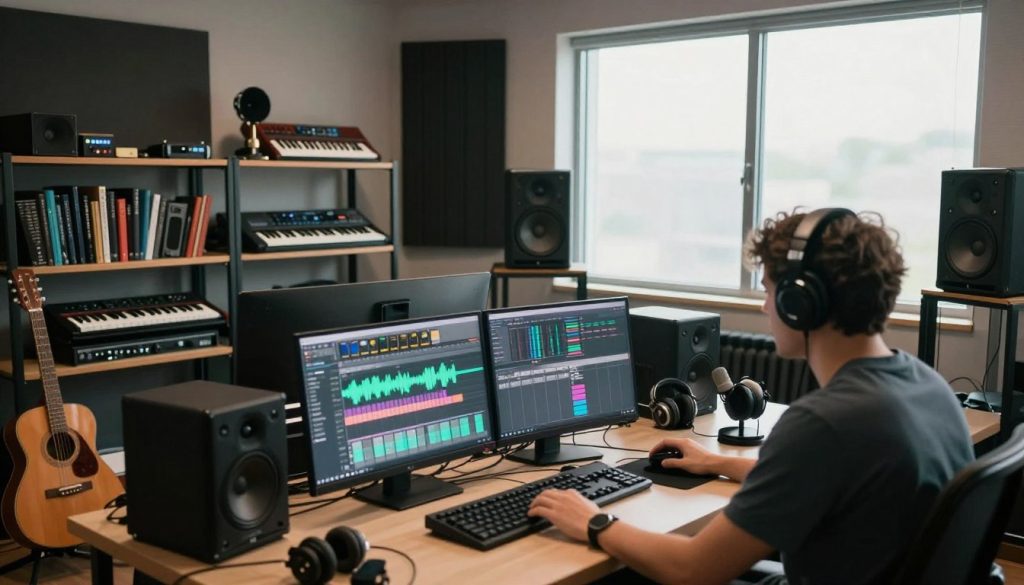
Creating a scalable system for your sound assets is key to keeping your project organized. Managing hundreds of files without a clear plan can be overwhelming. Setting up a clear workflow helps you stay focused on creating, not searching for files.
“Efficiency is doing things right; effectiveness is doing the right things.”
Organizing Your Asset Library
A well-organized folder structure is the base of good asset management. Organize your files by type, like ambient sounds, UI effects, and character voices. This makes finding what you need quick and easy.
Using metadata tags can make searching even faster. Add tags like “mood,” “intensity,” or “frequency range” to your files. This way, you can quickly find the right sound for your project.
| Category | Folder Name | Primary Use |
|---|---|---|
| Ambience | /01_Ambience | Background textures |
| Music | /02_Music_Loops | Dynamic soundtracks |
| UI/FX | /03_Interface | Menu and interaction |
Naming Conventions for Efficient Implementation
Using consistent naming helps everyone understand your files. A clear format means you won’t have to guess what a file is. Try using: Category_Subcategory_Descriptor_Version.
For example, “Amb_Forest_Night_Loop_01” is better than “Audio_Final_v2.” Standardization saves a lot of time when integrating assets. It keeps your workflow smooth and free of errors.
Layering Techniques for Depth and Realism
You can turn a flat audio into a rich, immersive world by mastering layering. Stacking sound elements creates a three-dimensional space. This pulls the player into the scene.
This process needs a balance between background sounds and active music.
Combining Ambient Textures with Rhythmic Loops
A good soundscape often starts with ambient textures. These textures set the scene, like distant city sounds or soft wind. Adding rhythmic loops on top gives the scene forward momentum.
Here are tips for mixing your sounds:
- Use low-pass filters on ambient textures to keep them from overpowering the main melody.
- Make sure your rhythmic loops match the scene’s emotional feel.
- Change the volume of your loops to add dynamic movement to the scene.
Using Frequency Masking to Prevent Audio Clutter
Adding more layers can lead to frequency masking. This happens when sounds fight for the same space in the frequency spectrum. Effective audio management means giving each sound its own space.
To fix this, use equalization on your tracks. If your loop has a strong bass, cut the low-end of your textures. This keeps each sound clear and distinct.
“Clarity in a mix is not about how many sounds you have, but how well each sound occupies its own space.”
Always check your mix to avoid one sound taking over. A clean mix keeps the emotional resonance of your project. It also keeps the technical quality high.
Implementing Adaptive Audio Triggers
Adaptive audio makes a game feel alive. It links sound to what the player does, making the game feel personal and interactive. This is what makes a game stand out.
Scripting Transitions Based on Gameplay Events
To make the game truly responsive, link specific gameplay events to your audio. When a player does something, like entering a new room, the sound changes instantly. Use simple flags or state machines to manage these changes well.
Keep your scripts simple to avoid slowing down the game. Use event-driven architecture to play audio only when needed. This keeps the game running smoothly and sounds great.
Managing Crossfades for Smooth Scene Changes
Audio cuts can ruin the game’s feel. Crossfades blend sounds smoothly, making transitions feel natural. Try different fade types to find the right fit for each scene.
Getting the timing right is key. A fade that’s too short can sound harsh, while a long one can get messy. Always test your transitions to keep the game’s emotional feel strong.
| Trigger Type | Transition Method | Best Use Case | Impact Level |
|---|---|---|---|
| Instant Switch | Hard Cut | Combat hits | High |
| Linear Fade | Crossfade | Room changes | Medium |
| Logarithmic | Smooth Blend | Atmospheric shifts | Subtle |
| Dynamic Layer | Volume Automation | Intensity buildup | High |
Advanced Mixing for NSFW Soundtrack Production
Advanced mixing turns a regular project into a top-notch experience. When you work on your nsfw soundtrack, you aim for more than just playing sounds. You aim to create a professional atmosphere that moves listeners.
This process focuses on how sound affects space and emotion. It’s about making the listener feel something real.
Applying Compression and EQ to Enhance Intimacy
To create a real emotional connection, you need to tweak your audio carefully. An equalizer helps you highlight soft sounds and moods. Boosting mid-range frequencies makes these details stand out.
Compression keeps your audio steady and in check. It makes sure quiet sounds are heard without being drowned out. This balance is key for a seamless and immersive nsfw soundtrack.
Utilizing Spatial Audio to Increase Player Presence
Spatial audio turns a flat soundscape into a physically tangible world. It makes the listener feel like the action is happening right next to them. This is crucial for creating a sense of closeness.
Try using panning and depth to focus the player’s attention. When sounds move around the listener, the overall realism of your nsfw soundtrack grows. This makes your virtual world feel alive and engaging.
Testing and Refining Your Audio Environment
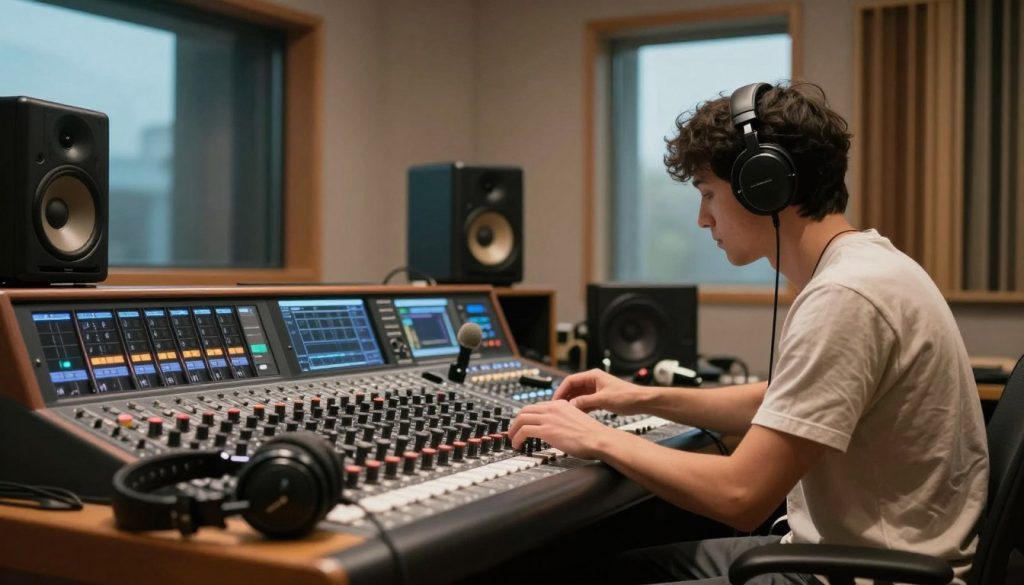
Improving your soundscape is key to making a game truly immersive. Even top-notch audio can fall short if it doesn’t fit well in the game engine. It’s important to make sure every sound layer enhances the game without overwhelming the player.
Conducting Playtests for Audio Balance
Begin by checking the technical balance of your audio. Play through each scene, adjusting volumes to keep dialogue clear. If music or sound effects overpower each other, the player’s immersion will suffer.
Test your audio on different devices to see how it sounds. Try it on high-end headphones, gaming headsets, and even laptop speakers. This rigorous approach helps spot issues that might cause audio problems during long playtimes.
Gathering Feedback on Emotional Resonance
After fixing the technical aspects, focus on the emotional impact of your sound design. Get a small group of testers to play your game and note their reactions to audio cues. Ask if the music and ambient sounds match the mood of each scene.
Qualitative feedback is crucial for understanding how players feel about your soundscape. Use a table to track important metrics during testing. This ensures you’re meeting your design goals.
| Metric | Focus Area | Success Indicator |
|---|---|---|
| Clarity | Dialogue vs. Music | Speech is always intelligible |
| Immersion | Ambient Textures | Player feels present in the scene |
| Emotional Flow | Dynamic Transitions | Audio shifts match scene intensity |
| Fatigue | Frequency Balance | No harsh or piercing sounds |
Analyze this data to make further adjustments. If a scene feels off, tweak your spatial audio settings or the intensity of your music. Regular refinement keeps your audio engaging and emotionally impactful for all players.
Troubleshooting Common Audio Implementation Issues
Even the best audio projects can hit technical roadblocks. These can ruin the player’s experience. Proactive troubleshooting is key to keep your audio clear and engaging.
Resolving Phase Cancellation and Clipping
Phase cancellation happens when two audio signals cancel each other out. This results in a thin sound. To fix it, check the polarity of your stereo tracks or adjust the phase in your digital audio workstation. Always verify your mix in mono to spot these issues early.
Digital clipping occurs when audio signals go beyond the maximum volume. This causes harsh, distorted sounds that break the player’s focus. To avoid this, implement proper gain staging and use a limiter on your master bus to keep levels safe.
Fixing Loop Gaps and Stuttering Audio
Loop gaps are noticeable clicks or silences at the end of music files. They’re often due to extra metadata or silence. Trim your files at the zero-crossing point for a seamless transition between loops.
Stuttering audio usually means high CPU usage or wrong buffer settings. If your audio engine can’t handle assets in real-time, playback will skip or lag. Optimizing your file formats and using compressed audio can help reduce system load and prevent stuttering.
Leveraging AI Audio Tips for Faster Development
Intelligent software can greatly speed up your audio work. By using ai audio tips, you can focus more on creative sound design. This way, you keep quality high and meet deadlines.
Using AI Tools for Background Noise Removal
Audio recordings often have unwanted sounds like hums and clicks. AI tools can remove these, keeping your project immersive. This is crucial for an ai porn game sound to sound clear and professional.
Here are the benefits of using AI for noise removal:
- Time Efficiency: Clean up hours of audio in minutes.
- Consistency: Keep sound quality the same across recordings.
- Clarity: Get rid of small distractions that can pull you out of the game.
Automating Soundscape Generation for Dynamic Environments
Creating a dynamic world needs audio that changes with the player’s actions. Procedural generation can create soundscapes that change in real-time. This avoids the tired feel of static loops.
Tools like Endel show how personalized sound environments can improve focus and emotions. By using these systems, you can make a ai porn game sound that feels unique to each scene. Automation lets you add layers of sound that change with the game, keeping the audio intense and fitting the moment. Dynamic generation helps you grow your project without needing to compose every background music variation by hand.
Best Practices for Long-Term Audio Maintenance
For your audio projects to last, you need to keep up with maintenance and updates. New tech can make your old files hard to use. Regularly checking your files helps keep your audio experiences top-notch.
Updating Sound Libraries for Modern Hardware
Today’s tech wants better sound and faster files. You should change your old files to new formats like Opus or high-bitrate Ogg Vorbis. These formats give superior clarity and are easy on file sizes for today’s games.
Using ai audio tips can make updating easier. Tools now let you update many files at once. This saves time and keeps your nsfw soundtrack sounding great on all devices.
Ensuring Compatibility Across Different Game Engines
Switching engines like Unity, Unreal, or Godot can reveal audio problems. Keep raw, uncompressed files ready for easy updates. This keeps your audio future-proof for any engine.
Also, use ai audio tips to keep your files organized. Good naming and folder setup help avoid problems when moving between engines. A well-organized nsfw soundtrack library lets you switch platforms smoothly.
| Maintenance Task | Frequency | Primary Benefit |
|---|---|---|
| Codec Updates | Annually | Improved Performance |
| Metadata Audit | Bi-Annually | Better Organization |
| Engine Compatibility Check | Per Major Update | Seamless Integration |
| Backup Verification | Quarterly | Data Security |
Conclusion
Mastering sound design makes any project come alive. You now have a detailed guide to improve your audio setup.
By layering and using adaptive triggers, you keep players hooked. A great nsfw soundtrack is key, making your game feel personal and keeping players coming back.
Using ai audio tips can make your work faster and better. These tools help you keep quality high while saving time on boring tasks.
Keeping your asset library up to date is crucial. Always look for new software updates to stay ahead in the game industry.
Your dedication to sound design makes your work stand out. Start using these tips to create more engaging worlds for your audience today.
FAQ
How does audio-visual synchronization improve the player’s experience in adult gaming?
Aligning sound with visual cues acts as a sensory anchor. It grounds the player in the virtual world. This psychological impact makes the experience feel cohesive and believable.
Using the Pomodoro technique helps analyze how these synchronized moments keep players engaged. It involves 25-50 minute focus blocks during development.
Where should I source high-quality assets for an nsfw soundtrack?
Look for reputable royalty-free libraries like Epidemic Sound, Splice, or AudioJungle. They offer high-fidelity textures for your nsfw soundtrack.
Focus on seamless music loops and ambient layers. Choose professional assets to avoid distracting artifacts and low-bitrate “stuttering”.
What are the best ai audio tips for streamlining my development workflow?
Use tools like Adobe Podcast AI or iZotope RX for automated background noise removal. Software like Endel can generate personalized adaptive sound environments.
These tools automate repetitive tasks. This lets you focus on creative mixing and emotional resonance.
How do I maintain dialogue clarity when there are multiple background layers?
Apply frequency masking techniques to ensure dialogue clarity. Use EQ to carve out a space in the mid-range for voices. Duck the ambient textures when a character speaks.
Balancing these elements against brown noise or pink noise layers keeps the player’s brain engaged. It prevents overwhelming their senses.
What technical steps can I take to fix loop gaps and clipping?
Always check your waveforms at the zero-crossing point to resolve clipping and phase cancellation. Ensure your music loops are perfectly edited to prevent “pop” or “click” at the end of a cycle.
Using compression and limiting in a digital audio workstation like Ableton Live or FL Studio keeps volume levels consistent throughout the game.
Why is spatial audio important for increasing player presence?
A: Spatial audio places sounds in a 3D space, enhancing player presence. Use engines like FMOD or Wwise for adaptive audio triggers that change based on the player’s proximity.
This creates a more intimate and realistic environment. The nsfw soundtrack feels like a living part of the world.
How do I manage smooth transitions between different game states?
Script crossfades and adaptive triggers for seamless gameplay events. For example, transition from a high-energy scene to a calm one with a gradual shift in ambient textures.
Proper naming conventions and an organized asset library in tools like Unity or Unreal Engine are key for managing these transitions.