Ever thought about what makes a digital scene memorable? Creating immersive digital spaces is more than tech skills. It’s about knowing how light, texture, and shape affect feelings.
This guide is your roadmap to making top-notch ai porn game environments. You’ll learn to mix your creative ideas with today’s tech limits. Whether it’s cozy bedrooms or huge sci-fi worlds, you’ll find the right balance.
We’ll cover the key tools and steps for making scenes that grab your audience’s attention. By following these steps, you’ll be ready to create detailed ruins and VR sets that pop. Let’s start your world-building journey.
Key Takeaways
- Master the balance between artistic creativity and technical performance.
- Learn to design diverse settings ranging from cozy rooms to vast space stations.
- Utilize modern software tools to streamline your development workflow.
- Understand how lighting and composition drive user engagement in virtual spaces.
- Apply professional techniques to create high-fidelity ruins and club interiors.
Understanding the Fundamentals of AI Porn Game Environments
Before you start designing, you need to understand the basics. Creating ai porn game environments is more than just tech skills. It’s about knowing how users will interact with your virtual world.
Focus on how space and user experience work together. This way, you can make settings that are both immersive and meaningful.
Defining Your Aesthetic Goals
First, you must have a clear vision for your virtual world’s look. Decide if you want realism or a stylized, artistic feel. Consistency is key to keeping your audience interested and avoiding visual fatigue.
Think about how your environment will support user interaction. Just like social VR apps, your environment ai game should encourage exploration. When your aesthetic goals match the user experience, your space will feel natural and welcoming.
Selecting the Right AI Scene Builder Tools
Picking the right software is crucial for success. A good scene builder should be easy to use but also offer advanced customization. Make sure it fits well with your workflow to avoid tech issues.
When looking at a scene builder, check if it supports quick changes. Being able to test and adjust your environment ai game fast can save a lot of time. The best tools let you focus on your creativity while handling the tech tasks.
Quality in your ai porn game environments comes from mastering your software. Take time to learn your tools well. This will give you a significant competitive advantage in the digital world. With the right tech, you can create memorable experiences.
Setting Up Your Workspace for High-Quality Generation
A well-optimized workspace is key for smooth production in any environment AI game. When you work on 3D world creation, your computer needs to handle complex tasks without freezing. A solid setup lets you focus on your creative ideas without technical issues.
Hardware Requirements for Smooth Rendering
For top-notch digital environment rendering, you need powerful hardware. A strong GPU with lots of VRAM is crucial for handling detailed textures and complex effects. Also, make sure your system has at least 32GB of RAM to avoid lag during scene creation.
For virtual reality projects, your hardware must meet certain standards to keep frame rates high. Devices like the Oculus Rift and HTC Vive offer amazing experiences but need consistent performance to prevent sickness. Use the table below to check if your hardware is up to the task.
| Component | Entry Level | Professional Grade | Ultra Performance |
|---|---|---|---|
| GPU | RTX 3060 | RTX 4080 | RTX 4090 |
| RAM | 16 GB | 32 GB | 64 GB+ |
| VR Support | Basic | High Fidelity | Maximum Immersion |
Software Integration and Plugin Management
Your software setup is also crucial for 3D world creation. Organize your plugins and assets in one place to make your workflow smoother. Keeping your software up to date ensures it works well with the latest AI tools for digital environment rendering.
Good plugin management helps avoid common problems in complex projects. A tidy directory structure saves time searching for assets. This approach helps your environment AI game grow smoothly as your project gets bigger.
Mastering Prompt Engineering for Immersive Bedrooms
You can turn a blank digital space into a cozy bedroom with AI prompt engineering. To make it look real, think about how light hits every part of the room. By fine-tuning your prompts, you control the look of your digital environment rendering.
Defining Lighting and Mood for Intimate Spaces
Good lighting design is key for a cozy bedroom scene. Use specific light types in your prompts, like “warm golden hour glow” or “cool moonlight.” This helps your scene builder get the mood right.
“The soul of a room is found in the way light dances across its surfaces, turning a simple model into a place that feels truly inhabited.”
Here’s a table to pick the right lighting for your project:
| Mood | Light Source | Color Temperature | Shadow Intensity |
|---|---|---|---|
| Romantic | Candlelight | 2000K | Soft/Diffuse |
| Modern | Recessed LED | 4000K | Sharp/Defined |
| Relaxing | Sunset Window | 3000K | Long/Gentle |
Adding Realistic Textures and Furniture Assets
After setting the lighting, focus on adding real-looking 3D assets. High-quality texture mapping is key for things like velvet bedding and wood floors. Make sure your prompts clearly describe the materials to avoid a fake look.
Don’t forget the small details. Things like rumpled blankets and books on a nightstand make your scene feel real. With careful AI prompt engineering, every piece of furniture will fit perfectly. This makes your virtual bedroom feel welcoming and real.
Designing High-Energy Nightclub and Party Scenes
Turning a blank digital space into a lively nightclub is a fun challenge. You need to focus on the sensory details that make a party feel real and immersive. A good scene builder knows that the environment is the stage for all interactions in your virtual world.

Creating Dynamic Lighting Effects and Neon Aesthetics
Good lighting design is key to making a room feel like a buzzing social spot. Use vibrant neon aesthetics to mark your dance floor and bar. By playing with bloom settings and emissive materials, you can get that intense glow found in real clubs.
Knowing AI prompt engineering lets you create light patterns that match your scene’s mood. Choose high-contrast colors like deep purples and electric blues or hot pinks. These colors help create a unique look that keeps players interested.
Populating Scenes with Crowd Assets and Background Elements
A club needs the right vibe, which means it needs the right people. Like the lively open-mic nights in AltspaceVR, your space needs life. Use AI prompt engineering to make diverse crowd assets that add depth without slowing down your system.
Placing these assets wisely keeps your scene builder project smooth and lively. Here’s a table to help pick the right lighting and crowd for your club theme:
| Club Style | Primary Lighting | Crowd Density | Key Aesthetic |
|---|---|---|---|
| Underground Techno | Strobe & Dark | High | Industrial |
| Luxury Lounge | Warm & Soft | Low | Elegant |
| Retro Arcade | Neon & Bright | Medium | Nostalgic |
By mixing your lighting design with background elements, you create a unified experience. Always test your scene to make sure the crowd doesn’t block movement or cause visual mess. This focus on detail makes your virtual nightclub a top spot for users.
Constructing Futuristic Space Stations and Sci-Fi Interiors
When you step into space, your design choices set the scene’s mood. 3D world creation in sci-fi needs a mix of cold, industrial looks and advanced tech. Many designers use VR headsets to check their work’s scale and feel.
Utilizing Metallic Materials and Holographic Displays
Sci-fi scenes shine with reflective surfaces and light-based interfaces. Use brushed steel or chrome for a high-tech vibe. Holographic displays add a pop of color and serve as key points of interest.
Streamline your work with AI prompt engineering for complex parts like ventilation or control panels. This method keeps your design consistent and high-quality. Layering these elements makes your interior feel real and cutting-edge.
Implementing Zero-Gravity Visual Cues
Creating a sense of weightlessness is key in sci-fi design. Add floating objects like tools or debris to show the low-gravity setting. These details make the scene feel truly otherworldly.
Good 3D asset integration makes these floating items look natural. Make sure your lighting shows off these objects’ suspension. Mastering these visual tricks makes your sci-fi scenes more believable and engaging.
Building Atmospheric Ruins and Post-Apocalyptic Settings
Creating atmospheric ruins is key to 3D world creation. To feel real, scenes need to show time’s passage through decay. A ruin tells a story of what was lost.
Weathering Techniques for Realistic Decay
Realism comes from advanced texture mapping. Start with dirt, grime, and rust on your base materials. Subtle imperfections make a scene look abandoned for years.
Focus on areas where water pools or structures crack. Normal maps add depth to these, making light interact realistically. Consistency in weathering keeps the illusion alive.
Integrating Overgrown Vegetation and Environmental Hazards
Nature takes back structures in post-apocalyptic worlds. Place vines, moss, and grass in moist spots. This organic chaos contrasts with the ruins’ geometry, adding depth.
Include hazards like broken floors and toxic puddles. These elements make the player cautious. By balancing hazards with growth, you create a compelling and grounded experience.
Optimizing AI Porn Game Environments for Performance
Building immersive virtual worlds means performance is key. Even the most stunning ai porn game environments can fail if they stutter or crash. You need to focus on efficiency to keep your vision alive for players on different devices.
Managing Polygon Counts and Texture Resolution
Starting with game asset optimization means controlling your 3D models. High-polygon meshes look great but can slow down games. Use level-of-detail (LOD) systems to change models as they get farther from the camera.
Texture resolution is also crucial. While 4K textures are detailed, they use a lot of VRAM and can slow down loading. Finding the right balance between detail and memory is key for a smooth game.
“Performance is not just a technical requirement; it is the foundation upon which the entire user experience is built.”
Reducing Latency in Complex Scene Builds
Lag and input delay ruin the feel of interactive games. When tuning game performance, aim for a steady frame rate to avoid motion sickness. High latency often comes from complex lighting or scripts.
To fix this, bake lighting into static maps instead of calculating it in real-time. This game asset optimization trick lightens the GPU’s load. By making your scenes simpler, you keep your ai porn game environments smooth and responsive.
Regular game performance tuning lets you explore new ideas without losing usability. Watch your frame times and memory to find and fix problems before they affect players. Precision in your technical workflow shows you’re a true pro.
Developing Interactive VR Sets for Enhanced Immersion
To achieve VR immersion, you must design your digital space to feel real. In virtual reality, the user’s presence is key. You need to make sure they’re comfortable and see high-quality visuals.
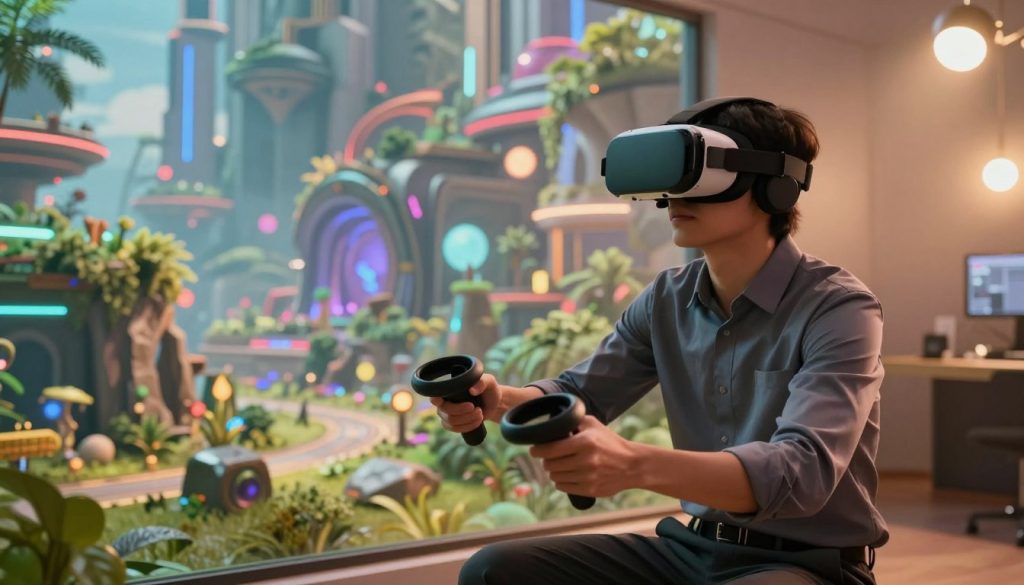
Scaling Assets for Virtual Reality Perspective
In regular games, you can make things look bigger or more impressive. But in VR, your brain notices if things are off scale. Make sure all objects and buildings are exactly the right size to avoid disorientation.
Optimizing game assets means checking them against a human size reference. If they’re too big or too small, it ruins the experience. Always check your sizes in the game engine to keep things feeling real.
Ensuring Proper Collision Detection in VR
Collision detection is crucial for a believable world. If you can walk through walls or objects clip into your view, it’s not immersive. Use game performance tuning to make sure collision meshes are light but accurate.
Using personal space bubbles is a great way to protect the user. These invisible areas keep players safe from NPCs and objects. This way, you create a space that feels real and safe.
Refining Details with Post-Processing and Color Grading
Polishing your virtual reality design is key to turning a raw render into a masterpiece. Through post-processing, you can make images come alive. This step is essential for creating the VR immersion users expect today.
As realistic avatars become common, these techniques will be crucial. They help characters blend into their surroundings. Color grading is vital to ensure everything looks cohesive.
Applying Cinematic Filters to Your Scenes
Cinematic filters add the final touch to your digital environment rendering. They can change the mood of a scene, like making a sci-fi station feel cold or a bedroom warm. These filters also help make the scene look more unified.
Try out LUTs to find the right style for your project. Consistency is key when using these effects. A good filter can make your work look professional and high-budget.
Balancing Contrast and Saturation for Visual Impact
Adjusting contrast and saturation guides the viewer’s eye in your interactive VR sets. High contrast adds drama, while balanced saturation keeps colors bright. Avoid over-processing to prevent eye strain.
First, check your black levels to ensure they’re deep. Then, adjust color saturation to make important elements stand out. Mastering these adjustments will greatly improve your virtual environments.
Troubleshooting Common Generation Errors
When your digital world starts to break, knowing how to fix it is key. Keeping your game running smoothly is crucial. You need to be proactive in solving problems.
Just like developers use tools to manage VR, you must check your project’s health often. This keeps your game running smoothly.
Fixing Texture Clipping and Lighting Artifacts
Visual problems often come from bad texture mapping or geometry issues. When assets don’t line up right, you get flickering surfaces. To fix this, adjust the depth bias or improve the collision meshes of your objects.
Lighting design is also important to avoid unwanted artifacts. If your scene has strange shadows or light leaks, check your light map resolution and shadow bias. Good lighting design makes your environment feel real and connected.
“Quality is never an accident; it is always the result of high intention, sincere effort, intelligent direction and skillful execution.”
Resolving Compatibility Issues Between AI Models
Using assets from different AI sources can slow down your game. To fix this, you need to optimize your assets well. If your game crashes or loads slowly, check if your vertex counts and shader requirements match.
Keeping your game running smoothly means finding out which models cause problems. Here’s a checklist to help you:
- Make sure all textures are the same format to save memory.
- Check your scene for extra assets that slow it down.
- Use scripts to check if texture mapping is consistent.
- Optimize complex geometry to improve performance.
By following these tips, you can keep your game stable and fun. Troubleshooting is not just fixing problems. It’s also about making your process better to avoid future issues.
Advanced Techniques for Custom Asset Integration
Advanced creators know that the secret to a truly immersive environment ai game lies in blending AI with external 3D assets. This way, you get total control over the visual fidelity of your projects. It bridges the gap between basic AI outputs and professional-grade virtual reality design.
Importing External 3D Models into Your AI Workflow
To achieve a unique look, you must learn how to import custom models into your existing pipeline. First, make sure your assets are optimized for the engine you use. High-polygon counts can hinder performance. Effective 3D asset integration lets you place high-fidelity furniture or props directly into your AI-generated rooms.
Always check if your model formats, such as .OBJ or .FBX, are compatible with your software. Once imported, use post-processing tools to match the lighting and color profiles of the external model with the AI background. This ensures a seamless blend that feels cohesive to the viewer.
Creating Custom Skyboxes and Background Environments
Your background environment sets the mood for the entire scene. While AI can generate decent backdrops, creating custom skyboxes provides the depth needed for high-end virtual reality design. You can use panoramic photography or 3D-rendered spheres to craft a unique horizon that fits your specific narrative.
As technology evolves toward tetherless glasses, your ability to build expansive, high-resolution backgrounds will become a vital skill. These devices will soon handle complex AR and VR content with ease, making your attention to detail more important than ever. Use post-processing to adjust the atmospheric haze and lighting of your skybox to match the foreground.
| Integration Method | Complexity Level | Visual Impact | Performance Cost |
|---|---|---|---|
| Direct Model Import | High | Excellent | Moderate |
| Custom Skybox | Medium | High | Low |
| AI Texture Mapping | Low | Moderate | Minimal |
By mastering these advanced techniques, you ensure your work remains at the cutting edge of the industry. Consistent 3D asset integration will define the next generation of interactive digital spaces.
Conclusion
Creating immersive spaces is a skill that grows with each new project. You now have the technical skills to turn raw code into stunning visuals. This mastery lets you expand what users experience in your virtual worlds.
True VR immersion comes from mixing high-quality assets with smooth performance. By paying attention to your environment’s details, you make spaces feel real and interactive. Your dedication to perfecting these scenes makes every user interaction meaningful and satisfying.
Building interactive VR sets means always improving and paying attention to details. Keep trying out new post-processing techniques to enhance your builds’ mood and atmosphere. These finishing touches make your work stand out in a crowded digital world. Always look for new software updates to stay ahead in this fast-changing field.
FAQ
How do I choose the right scene builder for my environment ai game?
Picking the right scene builder is key. Look for tools that work well with Unity or Unreal Engine. This ensures your software fits your artistic vision.
Start by defining your vision early. This helps create a virtual world that your community will love.
What are the essential hardware requirements for rendering high-quality 3D environments?
For smooth rendering, you need a strong GPU like the NVIDIA GeForce RTX 4090. High-end VR headsets, like the Valve Index or Meta Quest Pro, are crucial for testing.
They help check how your game handles complex 3D assets and processing.
How can I use prompt engineering to create realistic bedroom environments?
AI prompt engineering helps create detailed lighting and textures. Describe furniture and lighting to make spaces realistic. This method keeps your scenes consistent and immersive.
What is the best way to design high-energy nightclub and party scenes?
Focus on dynamic lighting and neon for a lively vibe. Use AI to create diverse crowd assets. Drawing from real-world clubs like VRChat can inspire your designs.
This makes your spaces feel alive and engaging for players.
How do I achieve a futuristic look for sci-fi space station interiors?
Use metallic materials and holographic displays for a sci-fi feel. AI helps define complex structures like space station corridors. Adding zero-gravity effects enhances the sense of scale in VR.
What techniques are used to build atmospheric ruins and post-apocalyptic settings?
Master weathering and vegetation to create realistic decay. Your scene builder should handle environmental hazards and textures. These details make your world feel lived-in and authentic.
How can I optimize an ai porn game environment for the best performance?
Optimization prevents motion sickness and keeps frame rates high. Manage polygon counts and texture resolution. Reducing latency keeps players immersed without lag.
Why is collision detection vital for interactive VR sets?
Proper collision detection and scaling ensure player comfort. Assets should feel real and interactions natural. Features like personal space bubbles are key for a safe user experience.
How do post-processing and color grading elevate a virtual scene?
Post-processing adds a cinematic touch. Filters and contrast balance create a visual impact. These techniques blend avatars into their surroundings, meeting modern VR standards.
What should I do if I encounter texture clipping or lighting artifacts?
Troubleshooting is part of the process. Fix texture clipping by adjusting asset placement. Managing technical integrity ensures a smooth workflow without artifacts.
Can I integrate custom 3D models with AI-generated environments?
Yes, advanced asset integration combines custom models with AI scenes. You can also create custom skyboxes. These techniques keep your game at the industry forefront.